Doctor Care Anywhere - Booking Journey.
Reimagining a simpler, easier and quicker way for patients to book an appointment.
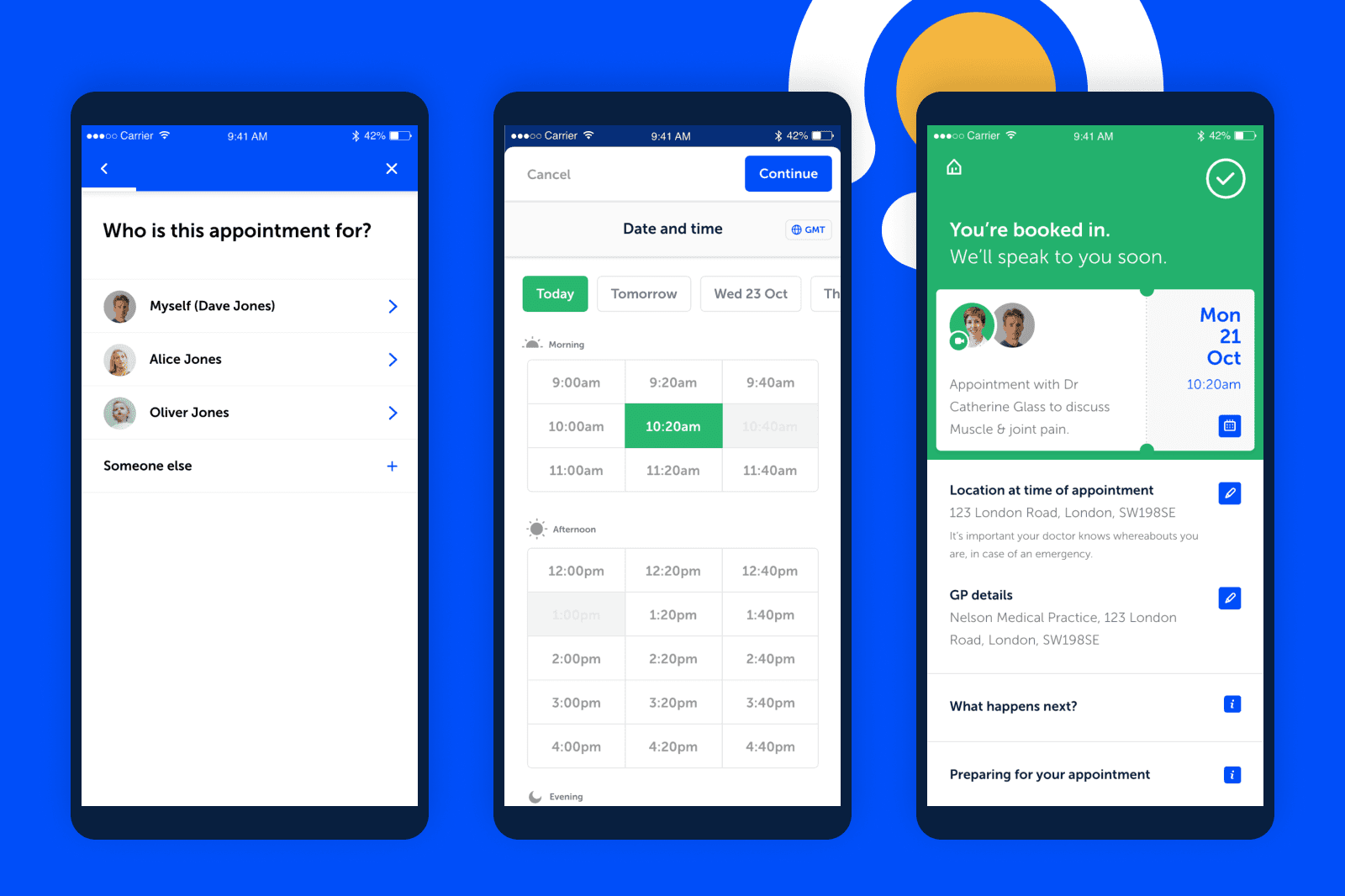
The problem.
As Doctor Care Anywhere's online GP platform and patient base grew, constraints of the original appointment booking journey became detrimental to the overall user experience. Users often complained that it was too difficult and time-consuming to find an appointment that suited them. Not something that should be experienced when you need to see a doctor.
Collaborative solution design through a series of remote workshops.
To find a solution, I led a cross-functional series of remote design ideation workshops aimed at reimagining the mobile app booking journey to make it simpler, easier and quicker for patients to book an appointment.
Planning workshops can be tough - especially when everyone is working remotely during a pandemic. Design workshops can be time-consuming and tiring and I've found this is exacerbated in a remote setting.
To make the workshop as accessible and energetic as possible, I split the process into multiple, smaller workshops (no more than 2 hours each), planned asynchronous activities (see more below) and scratched off some of the work ahead of time with the lead product manager.
The first of which, was to set the scene for the first workshop by defining a hypothesis and workshop challenge.
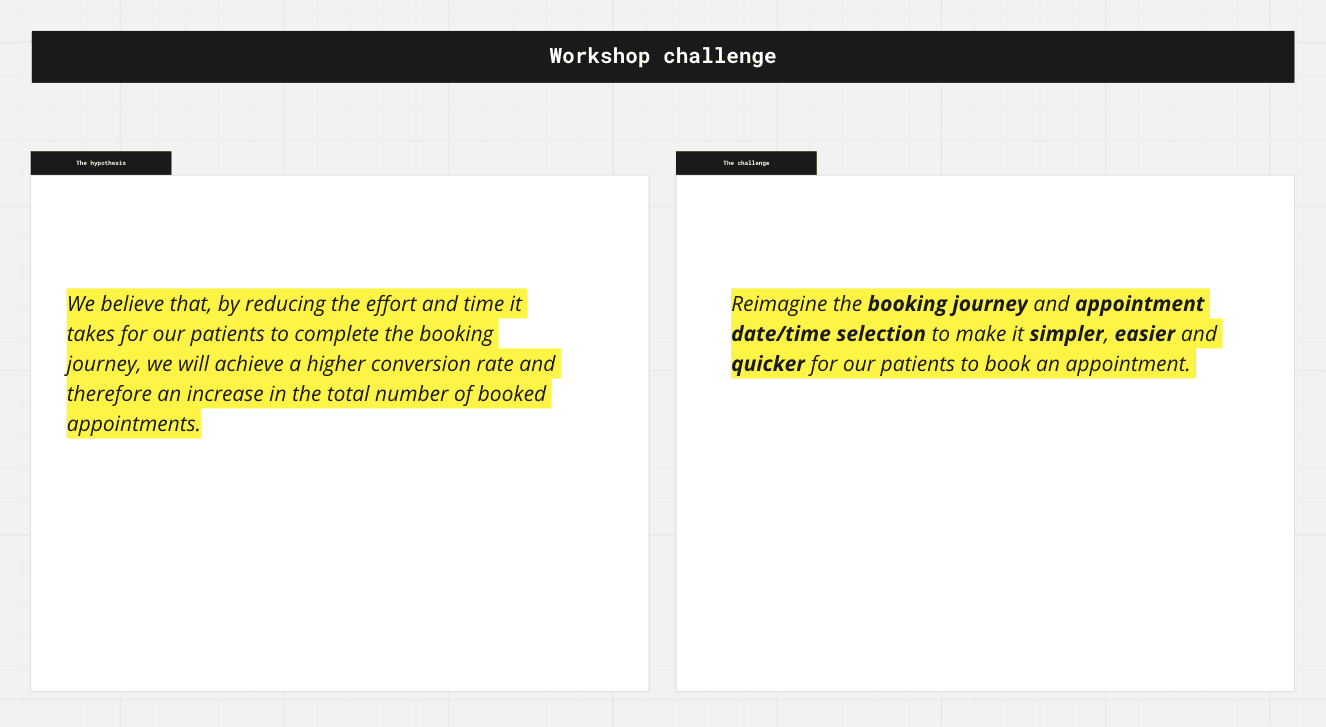
How might we… gain shared understanding.
The first workshop was focused on understanding the challenge in as much detail as possible.
The hypothesis and challenge were discussed and adjusted based on the sprint team's feedback.
The product manager gave a demo of the current journey.
And, there were lightning talks from UX, product, clinical, marketing and operations.
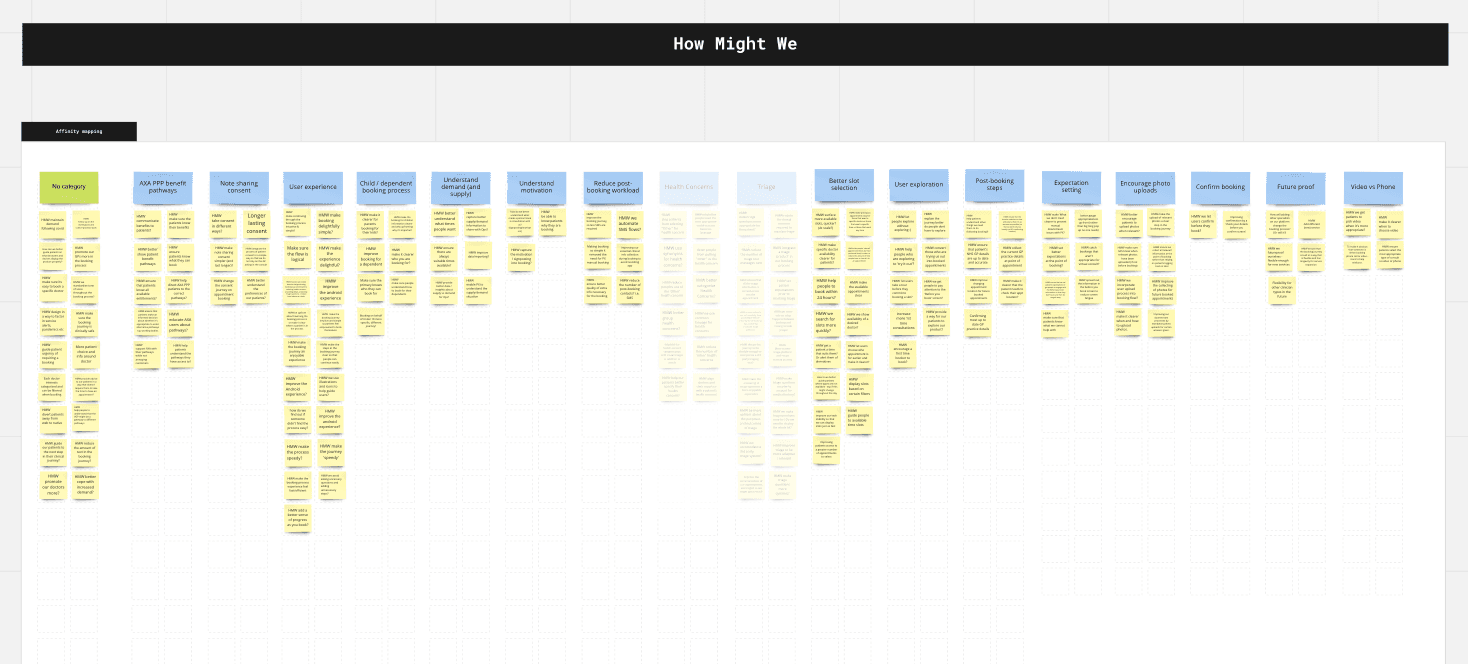
Whilst we gathered this information, each of the sprint team members captured "How might we's" on post-it notes in Miro.
We then used affinity mapping to collate the HMW post-it notes and identify key themes. We also took the opportunity to remove some themes from the scope of this project, making sure every one was on the same page.
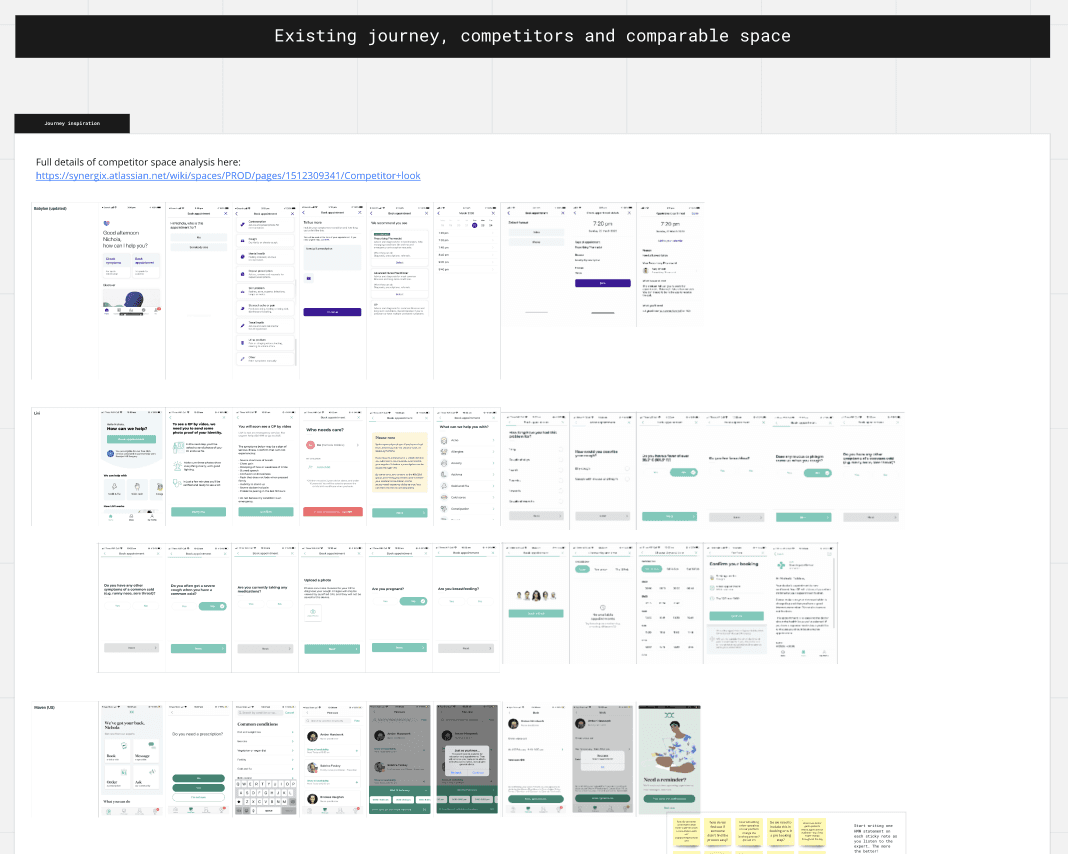
Inspiration through competitor and comparable research.
The next session was about fuelling ideation. We started by giving people time to review their notes and the affinity maps and themes created earlier.
In between sessions, I had asked all sprint team members to share any competitor journeys or similar journeys in other industries. Each member talked through their example and the group discussed and captured key insights to take inspiration from.
Information architecture.
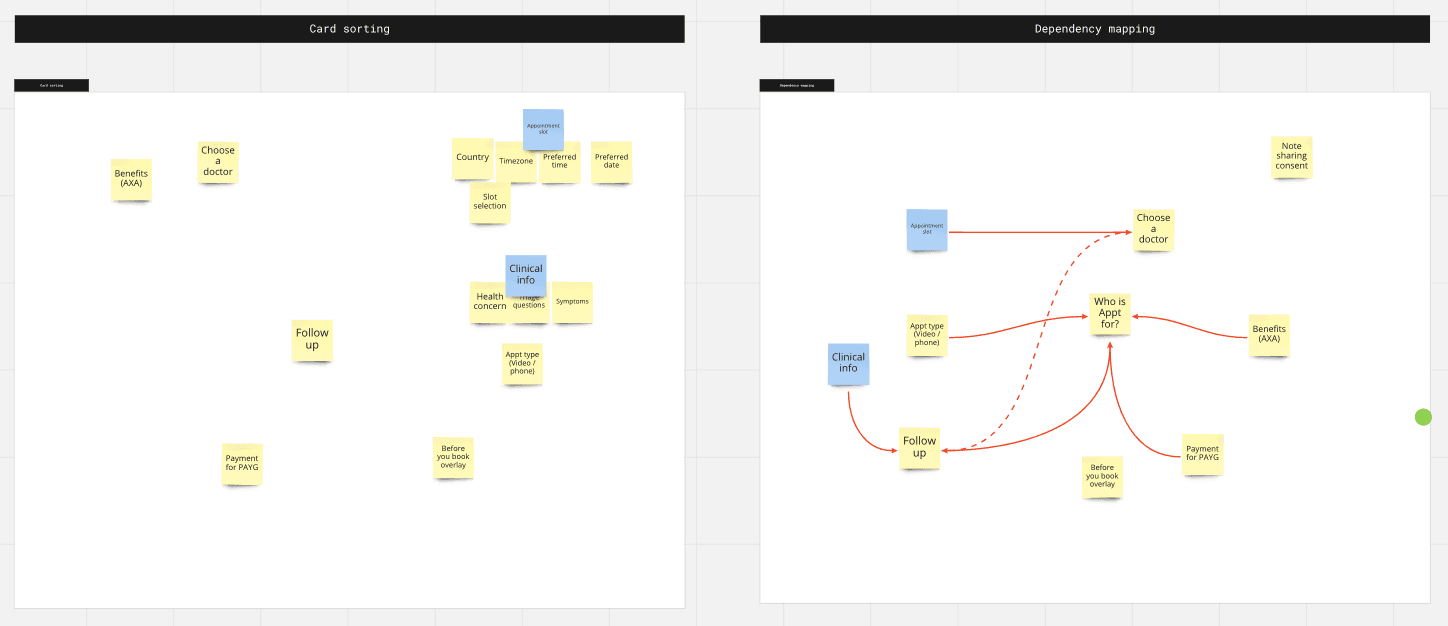
The appointment booking journey is unexpectedly complex from a company perspective. The content displayed and the information requested through the journey is dependent on the user group and their stage of care.
To try and ensure we stayed on the right path, I listed out each of the different content blocks and data collection points and worked with the team to sort them into logical groups and identify any known dependencies between them.
This way, when we got to designing, everybody understood the constraints.
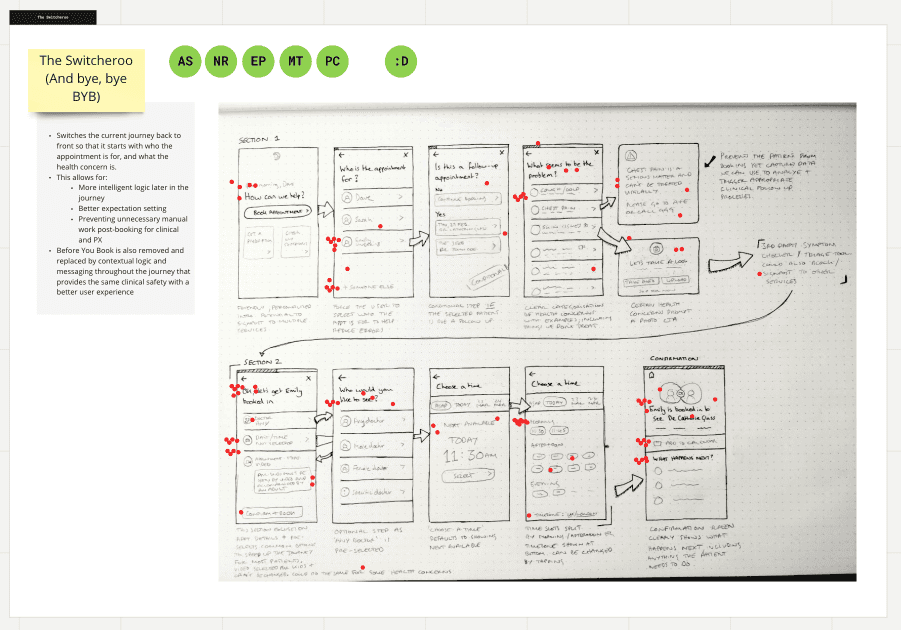
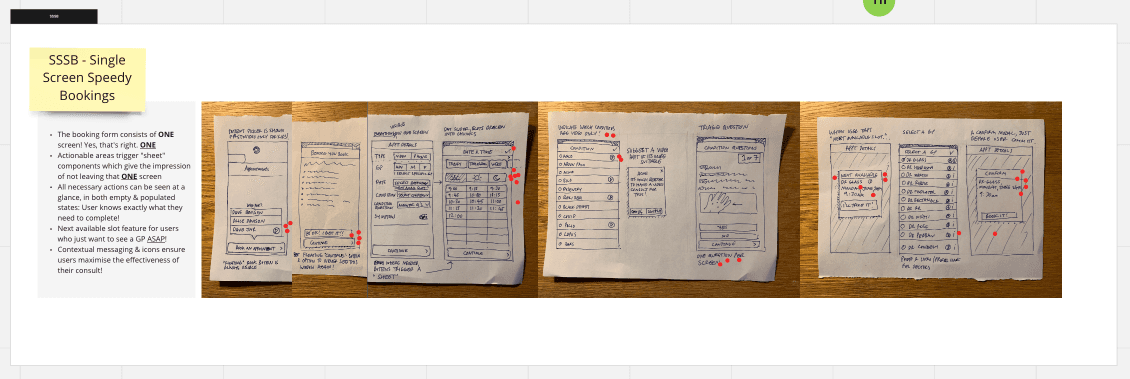
Ideation sketching and voting.
Time for the fun to begin. Sketching!
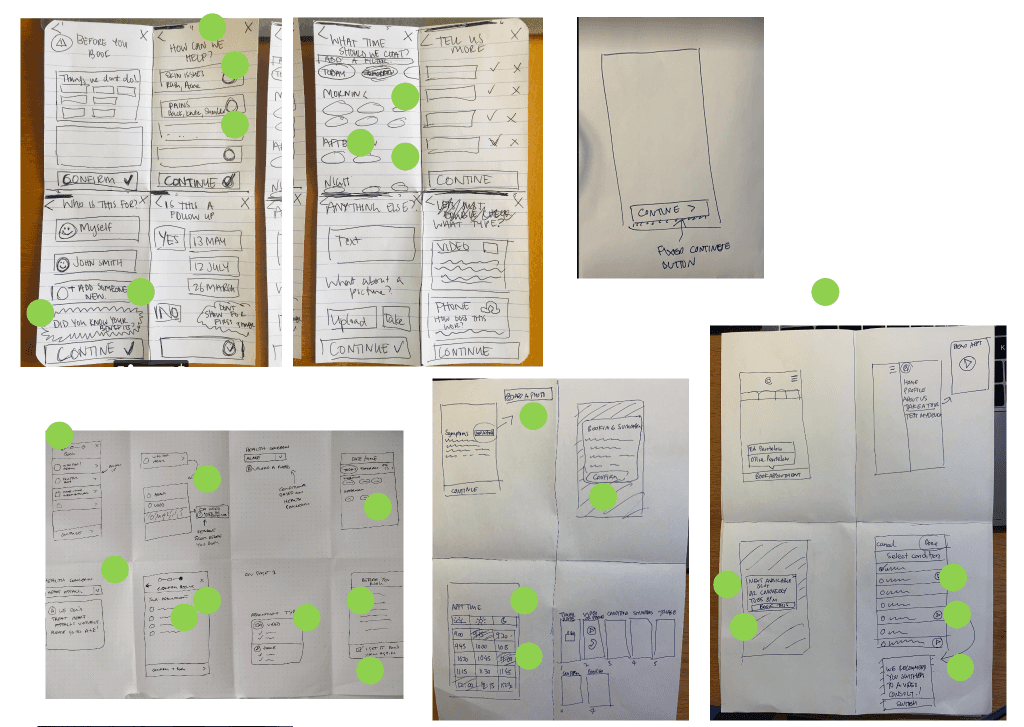
But this time, we tried something new. Rather than ideating together, I asked each of the sprint team to take away a crazy 8 exercise they could do whenever convenient to them (that day) and send a photo back to me. I trust they all limited themselves to 8 minutes!
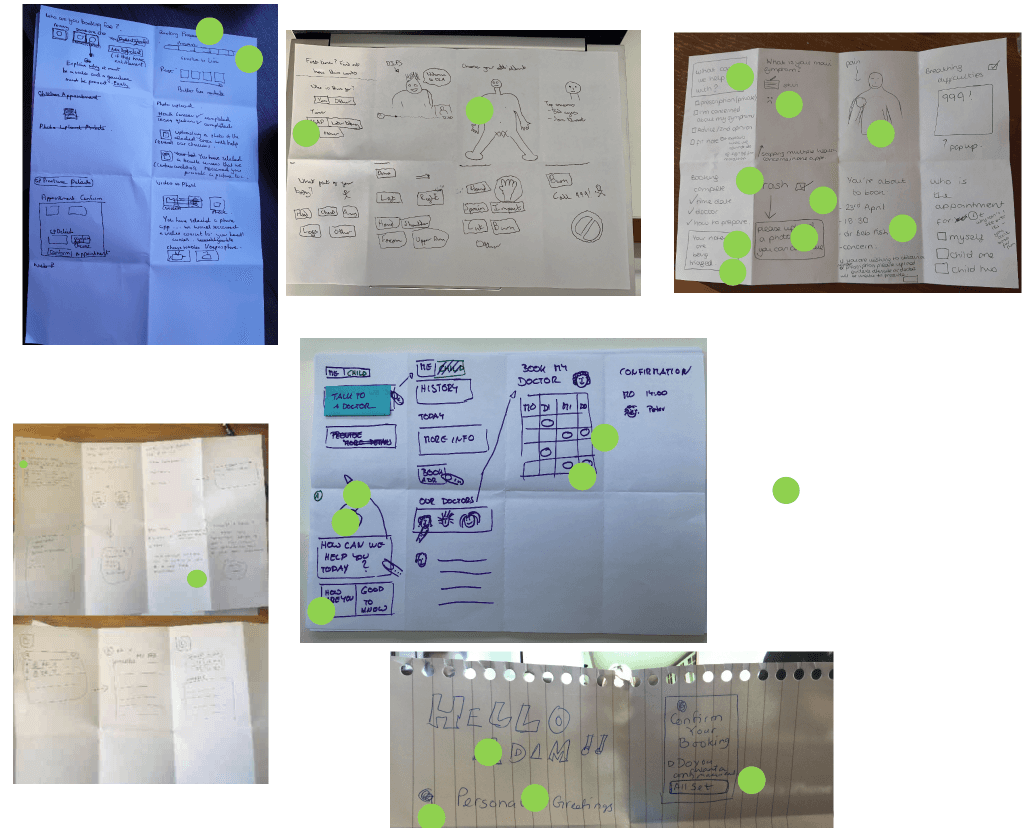
We then met for a very short session to look through each of the crazy 8 sketches, vote on the different ideas that we liked and, again, take a brief for an asynchronous solution sketch exercise.
The solution sketch photos were sent over to me at different points over the next 48 hours and uploaded to the Miro board for our next session - the final voting!
Prototype storyboard.
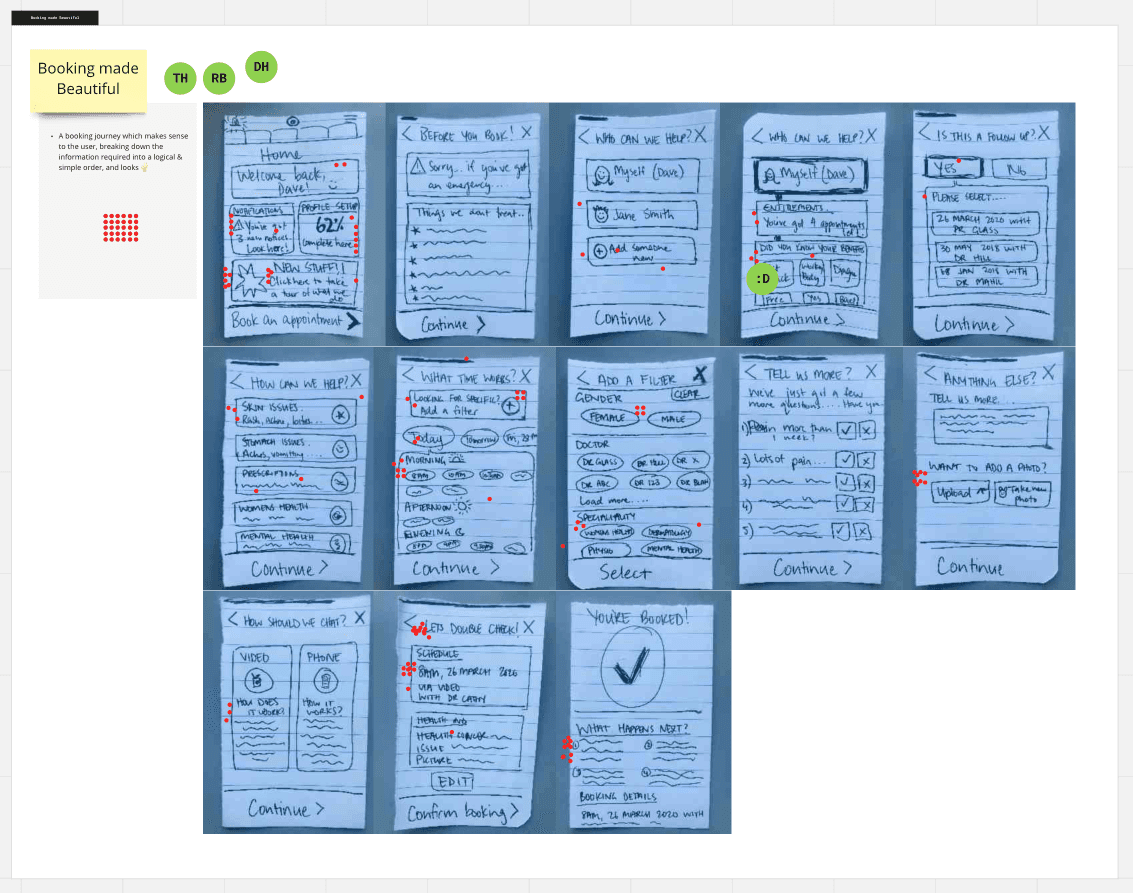
After the voting and discussion was complete, we had a clear winner for the main structure of the journey - and some nice additional ideas.
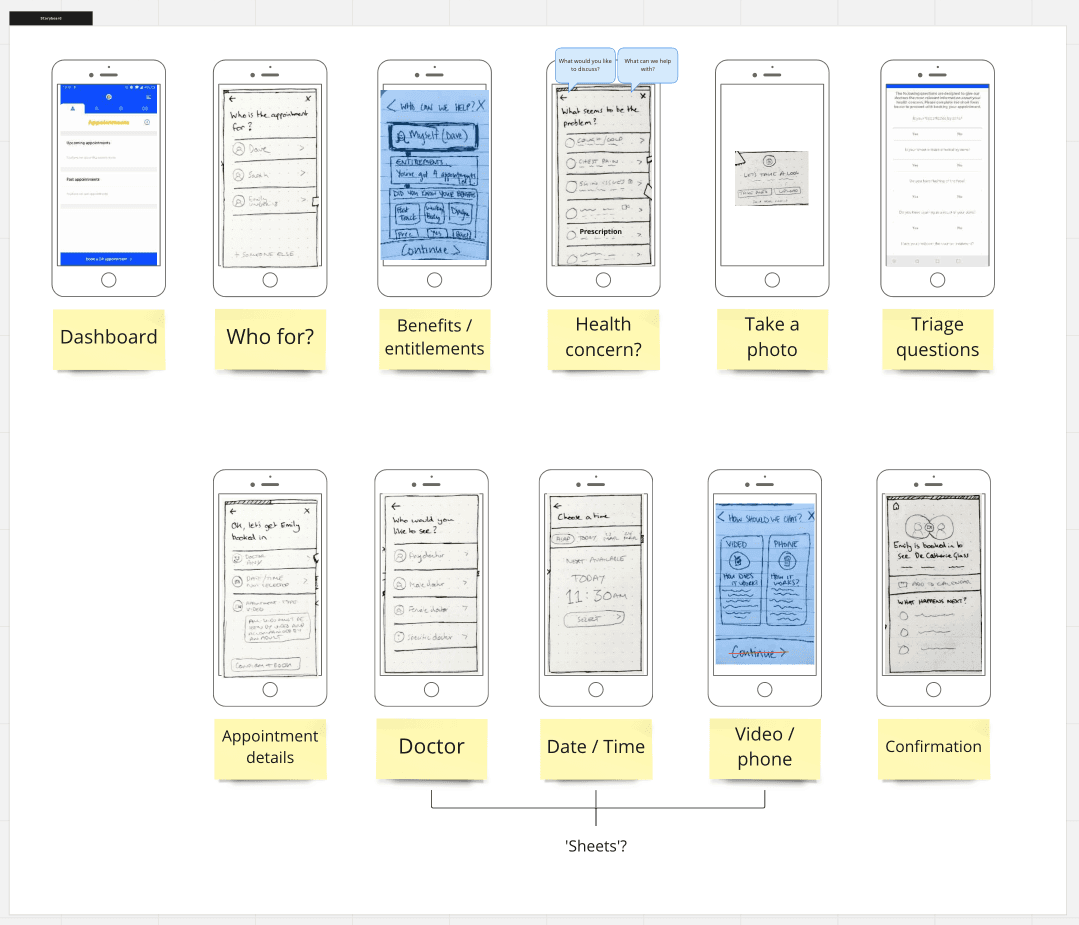
Outside of a workshop, I then worked with another designer and the lead product manager to create a storyboard for the prototype. This ensured everyone was on the same page ready to start building the prototype and planning user testing.
Prototyping and user testing.
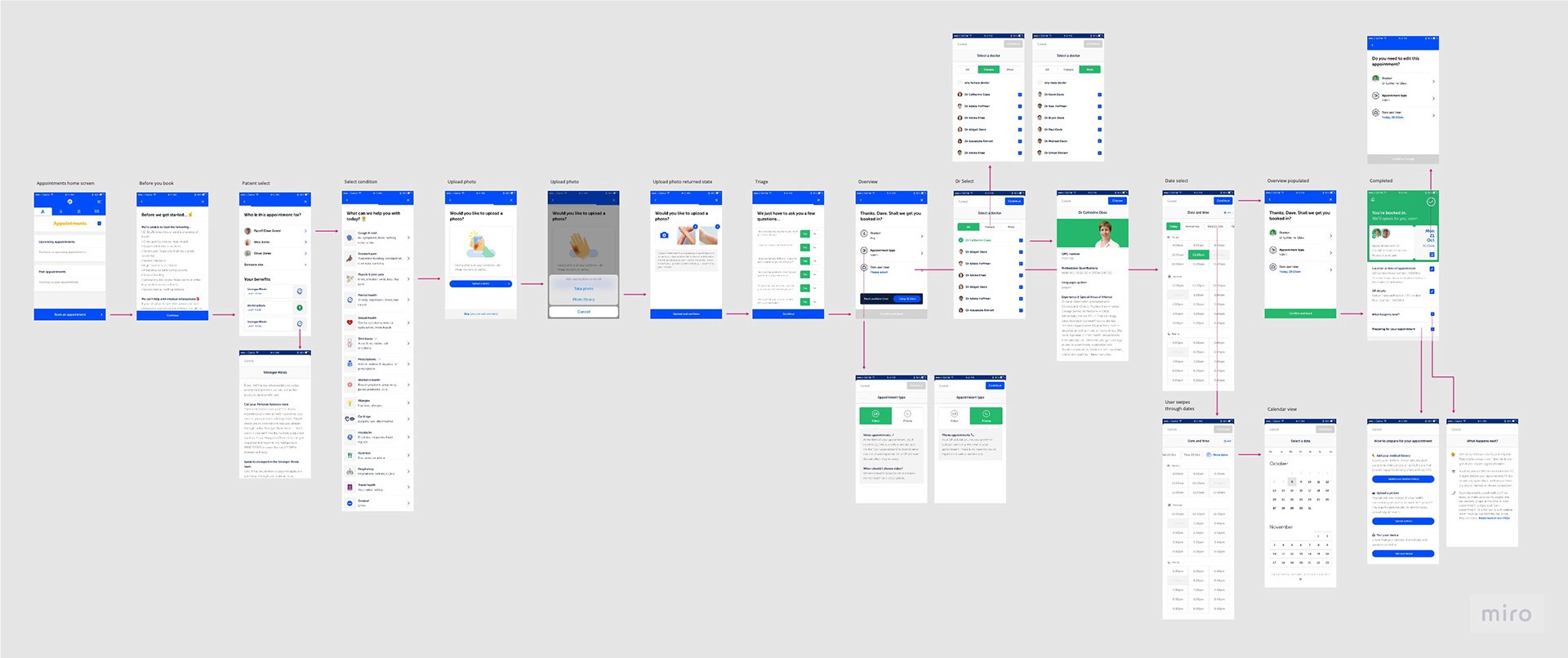
A couple of days later, the interaction designer on this project had created a working prototype. And, as I had the storyboard to reference, my user testing sessions were scripted and ready to go.
I conducted 2 rounds of user testing - with 5 participants each - feeding insights back into the team for further rounds of design iteration. The learnings required minor changes but were plentiful and really helped to pull the whole journey together and ensure it was super easy and quick for patients to book their appointment.
Kind words from wonderful people.
"I’m grateful to have worked with Adam and highly recommend him. Under his supervision, I completed some of my best work. His deep understanding of UX is nothing short of inspiring, and his ability to support and nurture this in others is something that I will always appreciate."
Wan Li
Doctor Care Anywhere